

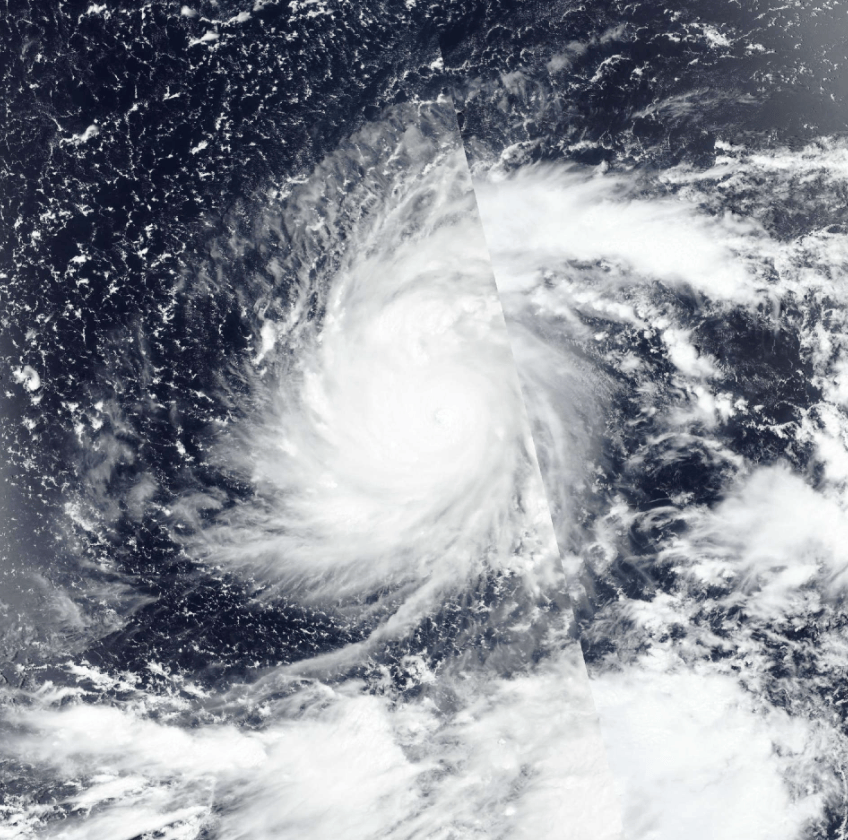
Will Super Typhoon Dolphin hit Japan?
Live Polymarket analytics for Will Super Typhoon Dolphin hit Japan? — $125K volume. Whale positions, bot activity, and order book depth on PolyCollect.
Price charts
Key metrics
Score = Volume + Liquidity + Spread. Whales add a small bonus.
Labels :
- Prime — score 88+ (after rounding), or strong volume + liquidity + tight spread with whales; not Thin
- Active — solid but below Prime thresholds
- Thin — low volume or wide spread (harder to trade size)
- Avoid — dead / illiquid, or market is closed
Not a prediction of how the market resolves
Number of seals (5K+), sharks (25K+) and whales (50K+) present in this market, throughout all outcomes
Outcome Analysis
Per-outcome prices, flow & whale positions
Resolution Criteria
This market resolves "Yes" if the center of Super Typhoon Dolphin's circulation physically crosses the coastline of any Japanese territory (including Okinawa, the Ryukyu Islands, and all main islands) on or before August 15, 2026. Resolution is determined by the Japan Meteorological Agency's (JMA) position advisories placing the storm over Japanese land (https://www.jma.go.jp/bosai/map.html#contents=typhoon&lang=en), or by credible international news reporting confirming the storm hitting Japanese territory. The system's classification is determined by the single JMA advisory in effect immediately prior to the observed crossing. Once that advisory fixes classification at the time of impact, no subsequent real-time advisory, reclassification, or post-season best-track reanalysis may retroactively change the outcome.
JMA position advisories are the primary resolution source. If a JMA advisory plots the center on Japanese land, the market resolves "Yes" regardless of what other sources say. If no JMA advisory plots the center on land but credible reporting confirms a crossing occurred between discrete advisory fixes, the market resolves "Yes." A disagreement exists only when a JMA advisory and credible reporting make contradictory claims about the storm's position at the same point in time; in that case, JMA is the default resolution source. In all cases, the classification is taken from the most recently issued JMA advisory prior to the confirmed crossing time.
This is a purely geographic criterion: the storm's center must pass over Japanese land, regardless of whether JMA formally designates the event as "landfall" or "passage." The most recently issued JMA advisory prior to the crossing must classify Dolphin as a tropical cyclone (tropical depression or higher). If that advisory classifies the system as extratropical, dissipated, or absorbed, the crossing does not count and the market will resolve to "No".
This market resolves "No" if Dolphin has been declared extratropical, dissipated, or absorbed on or before August 15 without having made landfall on Japanese territory, or if no landfall has physically occurred by the close of August 15, 2026.
Related Markets
TrendingTrending by 24h net flow
Resolution Criteria
This market resolves "Yes" if the center of Super Typhoon Dolphin's circulation physically crosses the coastline of any Japanese territory (including Okinawa, the Ryukyu Islands, and all main islands) on or before August 15, 2026. Resolution is determined by the Japan Meteorological Agency's (JMA) position advisories placing the storm over Japanese land (https://www.jma.go.jp/bosai/map.html#contents=typhoon&lang=en), or by credible international news reporting confirming the storm hitting Japanese territory. The system's classification is determined by the single JMA advisory in effect immediately prior to the observed crossing. Once that advisory fixes classification at the time of impact, no subsequent real-time advisory, reclassification, or post-season best-track reanalysis may retroactively change the outcome.
JMA position advisories are the primary resolution source. If a JMA advisory plots the center on Japanese land, the market resolves "Yes" regardless of what other sources say. If no JMA advisory plots the center on land but credible reporting confirms a crossing occurred between discrete advisory fixes, the market resolves "Yes." A disagreement exists only when a JMA advisory and credible reporting make contradictory claims about the storm's position at the same point in time; in that case, JMA is the default resolution source. In all cases, the classification is taken from the most recently issued JMA advisory prior to the confirmed crossing time.
This is a purely geographic criterion: the storm's center must pass over Japanese land, regardless of whether JMA formally designates the event as "landfall" or "passage." The most recently issued JMA advisory prior to the crossing must classify Dolphin as a tropical cyclone (tropical depression or higher). If that advisory classifies the system as extratropical, dissipated, or absorbed, the crossing does not count and the market will resolve to "No".
This market resolves "No" if Dolphin has been declared extratropical, dissipated, or absorbed on or before August 15 without having made landfall on Japanese territory, or if no landfall has physically occurred by the close of August 15, 2026.